
Living in San Diego means a lot of sunshine, beach days, and shorts in October. It also means a lot of tattoos that look a little tired a few years after they healed. Almost every week someone shows me an older piece and asks, "Can you fix this, or do I need to cover it up?"
Good news: a lot of the time you don't need a cover-up at all. Depending on what's going on, an older tattoo might just need a touch-up, a refresh, or a rework. Here's how I think about the difference, and how to tell which one you need.
Touch-Up: Small Fixes After Healing
A touch-up is the smallest of the three. Sometimes when a tattoo heals, a little spot doesn't hold ink the way the rest did. Maybe a line looks soft in one area, or a bit of shading came out lighter than the rest.
That's normal. Skin is skin, and everyone heals a little differently. A touch-up means going back over those small spots once the tattoo has fully healed, so the whole piece looks even. It's usually quick, and it's something I like to check on with my own clients after their tattoo settles in.
Refresh: Bringing Faded Ink Back to Life
A refresh is for a tattoo where the design is still good, but time and sun have worn it down. The blacks look more like grey, the color looks washed out, and the edges aren't as crisp as they used to be.
In a refresh, I go back over the existing tattoo to sharpen the lines, deepen the darks, and pack the color back in. The goal is to get it looking close to how it did when it first healed. It won't be brand new, because the skin underneath has aged too, but it can make a big difference.
Black and grey pieces usually respond really well to a refresh, because the darker contrast is still readable even when it's faded. Lighter colors like yellows, pastels, and white tend to fade the most, so those take a little more work to bring back.
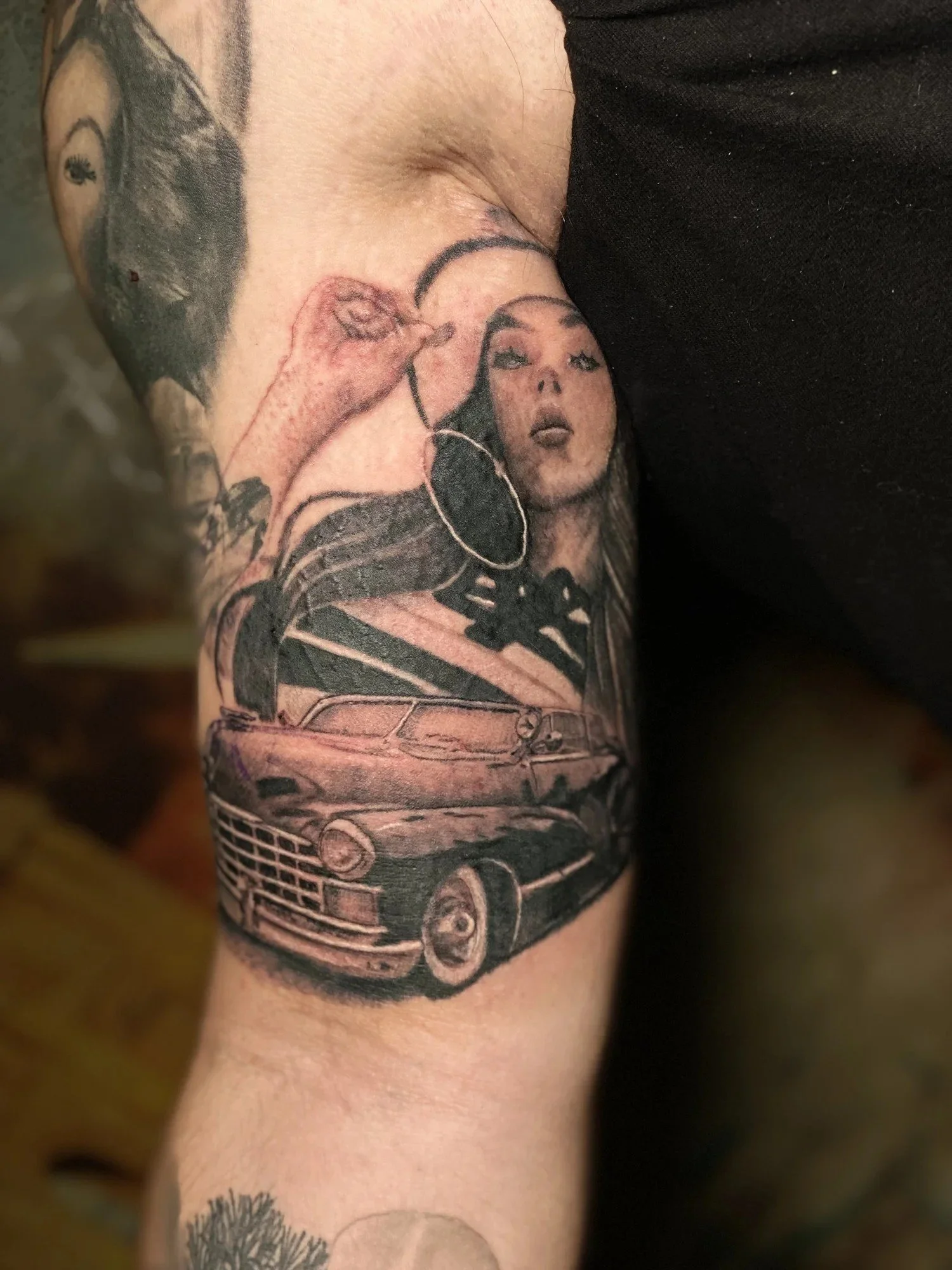
Rework: Turning an Old Tattoo Into Something Better
A rework goes beyond restoring what's there. It's for when you want to change or improve the tattoo itself, not just make it darker.
That might mean:
- Adding shading and depth to a flat or outlined piece
- Pushing an older design toward a more realistic look
- Adding a background or new elements so it fits into a bigger piece or sleeve
- Fixing proportions or details that never looked quite right
Reworks are one of my favorite things to do, because you get to take something someone has been living with for years and turn it into a piece they're proud to show off. Since I specialize in realism, a lot of my reworks are about adding real depth, light, and texture to older work.
When a Cover-Up Makes More Sense
Sometimes a tattoo has spread, blurred, or is just something you don't want to look at anymore. In that case, a cover-up might be the better route. That means designing a new piece that hides the old one completely. I wrote a whole post about that called "Cover-Up Tattoos: Can Your Old Tattoo Be Fixed?" if you want to dig into it.
The honest answer is that I need to see your tattoo in person, or at least in clear photos, to tell you which option makes the most sense. Size, how dark the old ink is, and where it is on your body all play a part.
Why San Diego Sun Matters for Your Ink
Sun is one of the biggest reasons tattoos fade, and here we get a lot of it year-round. Forearms, calves, shoulders, and the tops of feet take the most exposure, so those are the spots I see fading first.
A few simple habits help your tattoo stay sharp longer, whether it's brand new or freshly refreshed:
- Keep a new tattoo out of the sun while it heals. Cover it with loose clothing and skip the beach and the pool until it's fully healed. Follow the aftercare instructions your artist gives you.
- Use sunscreen once it's fully healed. After healing, sunscreen on your tattoo every time you're outside is the easiest way to keep it bold.
- Don't wait too long. If a piece is starting to fade, it's easier to refresh it while the lines and contrast are still readable.
If you want the full healing routine, check out my "Tattoo Aftercare: A Simple Day-by-Day Guide" post.
What to Expect When You Come In
When you reach out about an older tattoo, send me a few clear photos in good lighting, from straight on and from a little farther back. Let me know when you got it and what you'd like to change.
From there, we'll talk about whether it needs a touch-up, a refresh, a rework, or a cover-up, and I'll give you an idea of how many sessions it might take. My rate is $150 an hour, and I take a $100 deposit to hold your appointment.
Ready to Bring Your Tattoo Back?
If you've got a tattoo that's lost its punch, don't stress. There's usually a way to bring it back or make it even better than it was. Head over to my Appointments page to request a consultation, and send me those photos. I'd love to see what we can do with it here in San Diego.
